10% Temporary Tariff Under Section 122 Currently in Effect; 15% Rate Pending Further Executive Action: Following the Supreme Court’s decision invalidating the Administration’s use of the International Emergency Economic Powers Act (IEEPA) for tariff measures, the President issued an Executive Order implementing a 10% across-the-board tariff under Section 122 of the Trade Act of 1974. This temporary tariff applies to entries from February 24 through July 24, 2026, unless Congress reauthorizes it.
As of today, only the 10% tariff rate is in force. While the Administration has indicated the possibility of a 15% rate, that increase is not yet effective and would require a new Executive Order to be formally enacted.
Have questions about how these tariff changes affect your shipments? Our team of experts is ready to provide guidance, please Contact Us anytime.
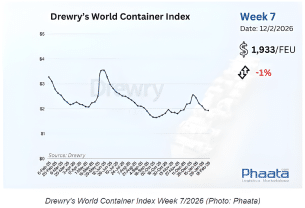
U.S. containerized import volumes reached 2,318,722 TEUs in January, showing a seasonal rebound from December’s slowdown and slightly exceeding the long-term average for the month.
Changes in trade between Asia and North America, along with developments in European supply chains, highlight key trends that can directly impact your shipments.
Recent bankruptcy filings across the trucking and supply chain sectors highlight continued market shifts and changing capacity dynamics. For shippers, staying informed helps reduce risk and make smarter transportation decisions.
Rather than signaling instability, these trends reflect an evolving freight market. Companies that stay agile, diversify capacity, and plan ahead are better positioned to maintain service continuity and protect their supply chains.
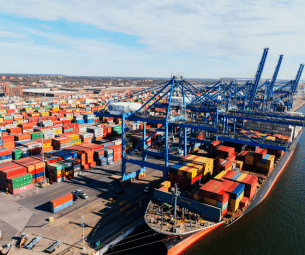
Industry leaders expect continued volatility across trade and global markets in 2026, prompting companies to rethink sourcing, capacity planning, and operational resilience. Forward-looking supply chains are focusing on smarter planning and stronger execution to stay ahead of disruption.
Rather than slowing down, many organizations are reengineering their supply chains and investing in technology to improve responsiveness, maintain reliability, and support long-term growth.
AI-driven innovation is reshaping customs clearance, transportation planning, and compliance workflows, helping supply chains move faster while improving accuracy and visibility across complex global operations.
As AI becomes more embedded in logistics, companies are combining automation with human expertise to streamline documentation, reduce delays, and strengthen cross-border execution.

- In-Transit Shipments Excluded: Cargo loaded onto a vessel and already in transit on its final mode of transportation before February 24 and entered before February 28 will not be subject to the new Section 122 tariff.
- Important Product Exclusions: Certain goods are excluded from the 10% tariff, including critical minerals, energy products, specific agricultural items, pharmaceuticals, selected electronics, passenger and medium/heavy trucks, informational materials, goods already subject to Section 232 tariffs, USMCA-eligible products, and qualifying CAFTA-DR textiles.
- IEEPA Tariffs No Longer in Effect: Tariffs previously applied under IEEPA are no longer valid. Importers should note that entries will not automatically adjust; recalculations will be required once U.S. Customs and Border Protection (CBP) releases official guidance through CSMS and updates ACE.
-
Unliquidated entries may be corrected at liquidation or through a Post Summary Correction (PSC) once CBP provides instructions.
-
Liquidated entries may require a formal protest to preserve refund rights.
-
Entries outside the protest window may require litigation at the CIT.
-
Entry Review & Recalculation Support: We help you assess which shipments are impacted, identify necessary adjustments, and protect your refund rights.
-
Customs Compliance Support: Our team reviews classification, valuation, origin declarations, and supporting documentation to ensure filings meet CBP’s heightened review standards.
-
Supply Chain Optimization: We evaluate sourcing strategies, routing alternatives, and duty mitigation opportunities during this temporary tariff window.
-
Timely Trade Updates: Receive proactive alerts on tariff changes, trade negotiations, and global policy shifts to stay ahead of regulatory impacts.
Have questions about how these tariff changes affect your shipments? Our team of experts is ready to provide guidance, please Contact Us anytime.